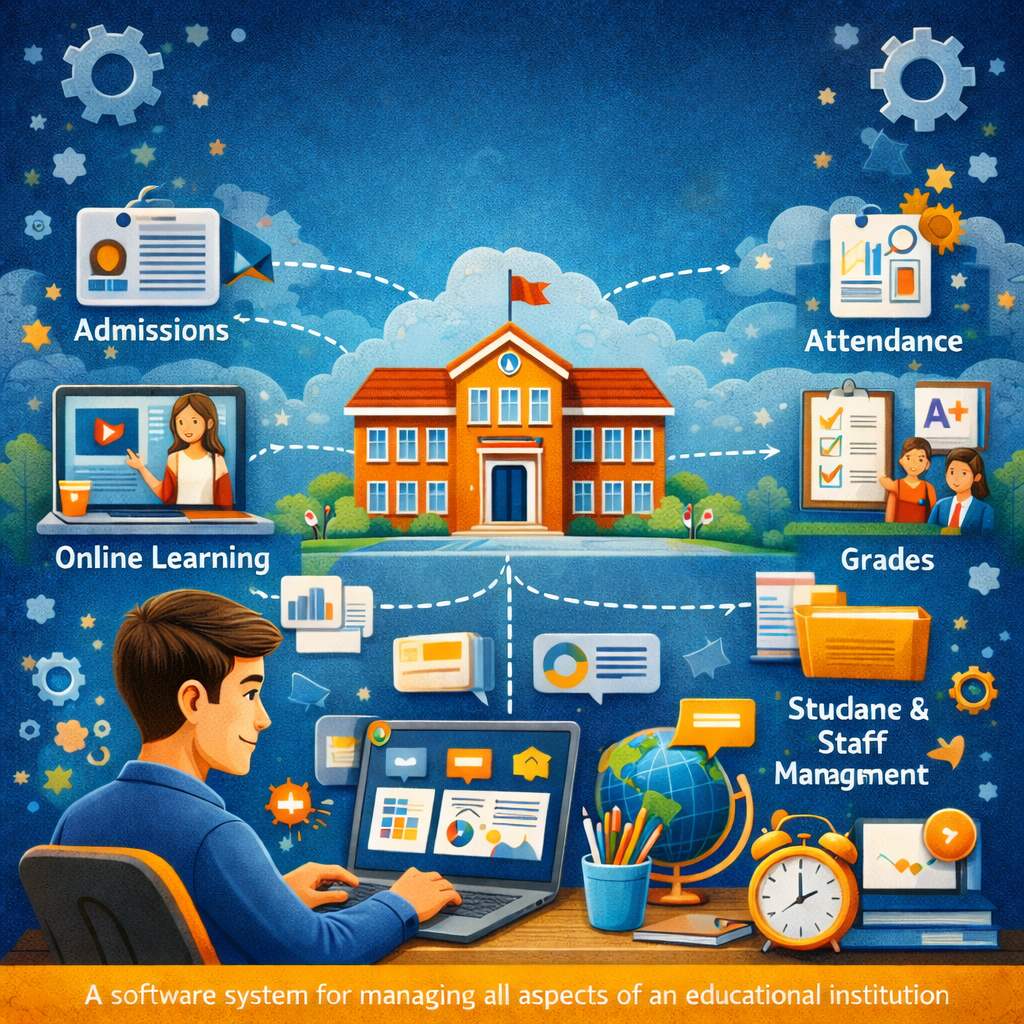

The education sector in Nigeria has seen a massive digital transformation in recent years, with Education Management Systems (EMS) leading the charge. These systems are designed to simplify complex school operations, including student data management, attendance tracking, grade monitoring, and communication among teachers, students, and parents. With increasing demands for efficiency and better tracking of educational outcomes, EMS solutions like ExcelMind are becoming indispensable for schools in Nigeria. In this article, we’ll explore what an Education Management System (EMS) is, how it works, and why it’s essential for schools today.
What is an Education Management System (EMS)?
An Education Management System (EMS) is a comprehensive software platform that helps educational institutions streamline operations. It integrates multiple administrative functions into a single system, making it easier for schools to manage student records, attendance, grades, timetables, and much more.
EMS platforms are designed to support the entire educational ecosystem, including:
- Administrators (who oversee the school’s operations),
- Teachers (who manage classes, assignments, and grading),
- Students (who access learning materials, grades, and assignments),
- Parents (who stay informed about their child’s academic performance and school activities).
At its core, an EMS like ExcelMind integrates various school management software features to meet schools’ operational, academic, and administrative needs.
Key Features of an Education Management System
1. Student Information Management
An EMS enables schools to store and manage detailed student information, including demographics, academic history, attendance, and behavior records. It serves as a central hub for easy access to student data, improving the overall efficiency of administrative processes.
2. Digital Attendance Tracking
Gone are the days of manually taking attendance. EMS platforms provide real-time tracking of student attendance, enabling quick, accurate reports and reducing errors.
3. Academic Grading and Performance Monitoring
Teachers can grade assignments and exams within the system, and students can view their grades instantly. EMS platforms often include performance tracking features that help teachers identify students who may need additional support.
4. Fee Management System
With EMS, schools can easily track and manage tuition fees, generate invoices, and offer parents secure online payment options. This reduces the administrative burden and ensures timely fee collection.
5. Online Timetable Management
EMS platforms allow schools to create and manage class schedules and timetables with ease. This ensures there are no scheduling conflicts, and teachers and students are always aware of their upcoming lessons.
6. Communication Tools for Parents and Teachers
An efficient EMS like ExcelMind offers built-in communication features, allowing parents to stay informed about their child’s progress, school activities, and upcoming events. Teachers can send updates, reminders, and feedback in real-time.
Why EMS is Important for Nigerian Schools
As Nigeria’s education system continues to evolve, school management software is becoming increasingly vital. The manual record-keeping system is not only time-consuming but also prone to errors, making it challenging for schools to keep up with the demands of modern education.
EMS platforms simplify these processes by automating administrative tasks, thus reducing human error and the overall workload for school staff. With online attendance tracking, real-time communication, and seamless grading systems, schools can operate more efficiently and effectively.
Additionally, EMS platforms like ExcelMind are designed with Nigerian schools in mind, addressing specific challenges such as inconsistent internet access, the need for secure fee payment systems, and the demand for mobile-friendly solutions.
Challenges Faced Without EMS in Nigerian Schools
1. Manual Record-Keeping
Traditional paper-based methods of tracking student attendance and grades are not only time-consuming but also prone to errors. EMS helps automate these tasks, improving accuracy and saving time.
2. Communication Gaps
Without a centralized communication system, there is often a disconnect between teachers, parents, and students. EMS platforms like ExcelMind foster better communication through direct messaging and real-time notifications.
3. Administrative Bottlenecks
With a large volume of students and administrative tasks, manual systems can create bottlenecks. By adopting an EMS, schools can streamline processes such as admissions, attendance, grading, and fee collection, enabling them to focus on growth.
Benefits of Implementing an EMS for Schools
- Improved Efficiency: Automating administrative tasks and processes reduces the workload for school staff, allowing them to focus on what truly matters—education.
- Better Data Management: EMS platforms allow schools to store and manage all student-related data in one place, ensuring that information is easily accessible and secure.
- Enhanced Parent Engagement: Through real-time notifications and direct communication tools, EMS fosters stronger relationships between schools and parents, improving overall student outcomes.
- Increased School Performance: With built-in tools to track academic performance and attendance, schools can proactively address issues and improve the overall learning experience for students.
How EMS Works for Nigerian Schools
EMS systems like ExcelMind are designed to meet the specific needs of Nigerian schools. By integrating school management software, attendance tracking, and fee management systems, ExcelMind offers a comprehensive solution that allows schools to operate more efficiently.
For example, schools using ExcelMind’s real-time attendance tracking can instantly see which students are absent, reducing the time it takes to follow up with parents. Teachers can also manage assignments, grades, and assessments, all within the same platform. Meanwhile, administrators can track overall school performance, ensuring that everything runs smoothly.
Conclusion
An Education Management System (EMS) is a game-changer for schools looking to streamline their operations, enhance student engagement, and improve communication with parents. In Nigeria, where administrative tasks often overwhelm schools, EMS platforms like ExcelMind offer a reliable, secure, and efficient solution.
Are you ready to streamline your school’s operations and boost your students’ success? Try ExcelMind’s EMS today and experience the difference.
Key Takeaways
- EMS platforms integrate multiple administrative tasks into one system, improving efficiency and accuracy.
- Real-time attendance tracking and academic performance monitoring enhance the learning experience.
- ExcelMind offers a comprehensive solution for Nigerian schools, making it easier to manage students, grades, and fees.
FAQs (With WordPress-Ready FAQ Schema)
Q1: What is an Education Management System (EMS)?
An Education Management System (EMS) is a software platform that helps schools manage student records, attendance, grades, and communication, improving overall school operations.
Q2: How does EMS improve attendance tracking in schools?
EMS systems allow schools to track student attendance in real time, providing accurate, up-to-date data and reducing errors associated with manual attendance tracking.
Q3: Can EMS help manage school fees?
Yes, EMS platforms like ExcelMind include fee management features that allow schools to track and collect fees online, send reminders, and generate invoices.
Q4: How does EMS enhance communication between parents and teachers?
EMS platforms provide built-in communication tools that allow parents and teachers to communicate directly, ensuring that both parties are always up to date on the student’s progress.